
Eighteen of India's 28 states exceeded the fiscal deficit ceiling of 3 per cent of GSDP in FY25, a deterioration comparable to the Covid year of 2020-21, according to the Comptroller and Auditor General (CAG). The report also noted a decline in states reporting a revenue surplus, with Bihar, Mizoram, and Telangana moving into deficit.

A new white paper released by the Tamilaga Vettri Kazhagam (TVK) government reveals that Tamil Nadu's direct debt has nearly doubled to an alarming 10 trillion in the past five years, exposing significant fiscal strain and a substantial debt burden on every citizen.

If TVK MLAs and ministers are perceived as clean, or demonstrably cleaner than their predecessors, the credibility dividend will be enormous. The voter will feel rewarded, points out Ramesh Menon.

A shift appears underway in India's tax landscape. States with relatively smaller tax collections like Odisha and Telangana are emerging as the fastest-growing contributors to indirect and direct tax collections, respectively.
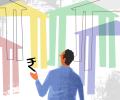
State debt is rising because revenues are disappointingly weak. Ten states have debt ratios exceeding 30 per cent. In 2023-2024, states were borrowing simply to meet day-to-day expenses, points out Debashis Basu.

A new report indicates that increasing unconditional cash transfer schemes for women across 12 Indian states are impacting their fiscal health, with six states projecting revenue deficits.

Schemes like the Mukhyamantri Majhi Ladki Bahin Yojana strain fiscal resources amid rising unemployment and prices of food items.
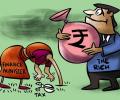
India's 18 largest states, accounting for over 90 per cent of the country's gross state domestic product (GSDP), are likely to record a marginal uptick in revenue growth to 7-9 per cent this year, from 6.6 per cent clocked in 2024-25 (FY25), rating agency Crisil said in a report on Tuesday. This growth, slower than the decadal average of about 10 per cent, would lift these states' cumulative revenue to around Rs 40 trillion in FY26 from Rs 37.26 trillion in FY25.

More than 58% of individual housing loans disbursed in 2023-2024 were more than 25 lakh in size.

Maharashtra's economic survey for 2002-03 says the state's economy was expected to grow at a lower rate of four per cent as against 6.8 per cent in the previous fiscal.

The Make in India Week has become a platform for two Bharatiya Janata Party (BJP)-ruled states to jostle for the number one destination in India for investor funds.

'We don't have to compete with Maharashtra or Gujarat. We have to now start thinking about how we compete with the United States or China.'

States are on track of fiscal consolidation with their total borrowings reaching Rs 5 trillion till October, which is 60 per cent of the projected borrowings of Rs 8.38 trillion till December 2024, according to data from official sources. Government officials said the lower-than-projected borrowings by states were a sign of prudent fiscal management by them. States announce their borrowing plans every quarter.

The states have outstanding liabilities of a whopping Rs 59,89,360 crore as on March 31, 2021, and the new sources of risk have emerged in the form of rising expenditure on non-merit freebies, the Supreme Court was told on Thursday by a PIL petitioner opposing irrational handouts.
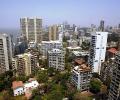
It, however, lags other states on crucial parameters such as health care and rural poverty.

Maharashtra's "radical" lockdown move will have an economic impact of Rs 40,000 crore, with the trade, hotels and transport sector to bear the biggest dent, Care Ratings said on Monday. The rating agency said the loss of economic activity will have a 0.32 per cent impact on the gross value added (GVA) growth at the national level. It revised down its national GDP growth estimate to 10.7 - 10.9 per cent from the 11 - 11.2 per cent given a week ago. Maharashtra has been contributing nearly 60 per cent to the daily COVID-19 infections nationally and had over 57,000 new cases on Sunday.

Tamil Nadu's finances most stressed, with gross fiscal deficit estimated at Rs 31,830 crore.

Economies of Punjab, Andhra Pradesh, Madhya Pradesh, Uttarakhand and Haryana may have grown at a slower pace than the national economy during 2022-2023.

If money allocations, investment commitments are a sign of better things to come, the state can be optimistic.

With 56,000 dollar-millionaire households, Maharashtra leads the country in wealth creation followed by Uttar Pradesh, Tamil Nadu, Karnataka and Gujarat, says a report. These states together account for 46 per cent of the 4.12-lakh millionaire households in the country. According to a wealth report by Hurun India, known for its annual rich list, there were 4.12 lakh dollar-millionaire households last year in the country, which has been one of the fastest wealth-creating economies producing the third-most number of billionaires annually.

The Gross State Domestic Product (GSDP) of Maharashtra is expected to grow at 8.6 per cent during the year 2009-10 as against 3.4 per cent during the previous year, an economic survey said.

There has been a decline in foreign direct inflow from China in the last three years, with FDI coming down to USD 163.77 million in 2019-20, Minister of State for Finance Anurag Singh Thakur informed the Lok Sabha on Monday. Giving details of the total foreign direct investment (FDI) inflow from Chinese companies in India, he said, it was USD 350.22 million in 2017-18, while it declined to USD 229 million in the following year.
Bihar has been the top performer among the major states in terms of economic growth during the 11th Five Year Plan which ended on March 31, 2012.
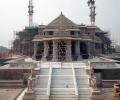
If Saudi Arabia, with just two Muslim holy sites of Mecca and Medina, can create a huge tourism-based ecosystem beyond oil, Ayodhya is sure to become the world's hottest religious tourism site in less than a decade, predicts R Jagannathan.
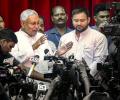
Various indicators make it amply clear that there are grave challenges facing the new government of Chief Minister Nitish Kumar, reports Indivjal Dhasmana.

Going by the strict criteria set, only Maharashtra, Tamil Nadu, Gujarat, Karnataka, Uttar Pradesh, Andhra Pradesh, Madhya Pradesh, and Haryana qualify for such extra borrowing, as of now.
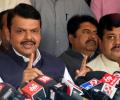
Speaking in the assembly, Fadnavis said a pen drive he had submitted contained a conversation between Waqf Board members Mohammad Arshad Khan and Mudasir Lambe.

The Centre on Tuesday permitted 20 states to raise Rs 68,825 crore through open market borrowings to bridge the GST revenue shortfall.
The Reserve Bank of India's observation that developmental expenditure in better-off states like Gujarat, Maharashtra and Goa is declining as a percentage of gross state domestic product (GSDP), whereas such expenditure is rising in underdeveloped states like Bihar and Jharkhand, has invited criticism from analysts.
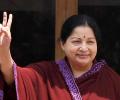
Tamil Nadu now has India's lowest fertility rate - lower than Australia, Finland and Belgium - second best infant mortality and maternal mortality rate; records among the lowest crime rates against women and children; and has more factories and provides more industrial employment than any other Indian state.
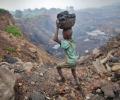
Political stability and a couple of big projects are pluses, but focus on medium and small industries is still missing.
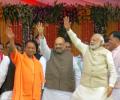
The BJP's manifesto for UP elections promised many things. But, given the state's precarious financial position, fulfilling these promises is likely to prove tricky, says Ishan Bakshi.

West Bengal was the second-most industrialised state in terms of value added and first in terms of number of factories and employment even in the mid-1960s. With a severe and long process of deindustrialisation, it lost its primacy.
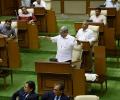
The Goa CM knows running a coalition government while pursuing a development agenda will require a fine balancing act.
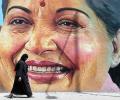
Tamil Nadu says it's intriguing only BJP-ruled states top the list, while industrialised states are given a go-by.

Bengaluru dominates Karnataka's economy and its infrastructure mess compounds the problems, with policies lagging need and expectations.

Bihar expects transfers from the Centre to grow 28 per cent in 2016-17.

The ripples from November 8 may be seen in next year's state budgets.

Ahead of the assembly elections next year, the BJP has been wallowing in a welter of ideas that has resurrected the debate on populism versus pragmatism, as it has to pander to two important but incompatible constituencies, of the freebie consuming masses and Bengaluru's heavy hitters craving for even roads, pristine lakes and unbroken power supply, reports Radhika Ramaseshan.

A large chunk of the Rs 8.8 lakh crore of investments the Patnaik government had attracted is in uncertain territory.
